
Vincent Audoire shares how modern tech leaders can design engineering teams around autonomy, mentorship, and transparency – from hiring product-minded developers to redefining “management” inside a Berlin-headquartered startup
In this episode, Vincent talks about recruiting engineers who think like product owners, why Feather treats managers more like mentors, and how open salary bands and public updates help them attract and retain talent in Europe’s most competitive tech hubs.
Feather spent its early scale-up years (2021–2024) growing out of Techspace, and it’s been inspiring to watch that journey up close. Speaking with Vincent for this episode offered a rare look behind the scenes – and we can’t wait to see what comes next for the team!
Top 3 Learnings from the Episode
1. Hire for autonomy, not control
For Vincent, the most scalable engineering culture starts with recruiting adults who manage themselves – people who treat their career as their own responsibility, not something “owned” by a manager.
“We really value autonomy and people being proactive… If you recruit those people well, they don’t really need to be actively managed because they take care of themselves.”
2. Evolve traditional management with mentorship and self-led development
Instead of just leaning on hierarchy to upskill and enable their teams, Feather leans on a self-led mentorship programme: clear competency grids, education budgets, and the freedom to choose who you learn from. Management becomes support, not command and control.
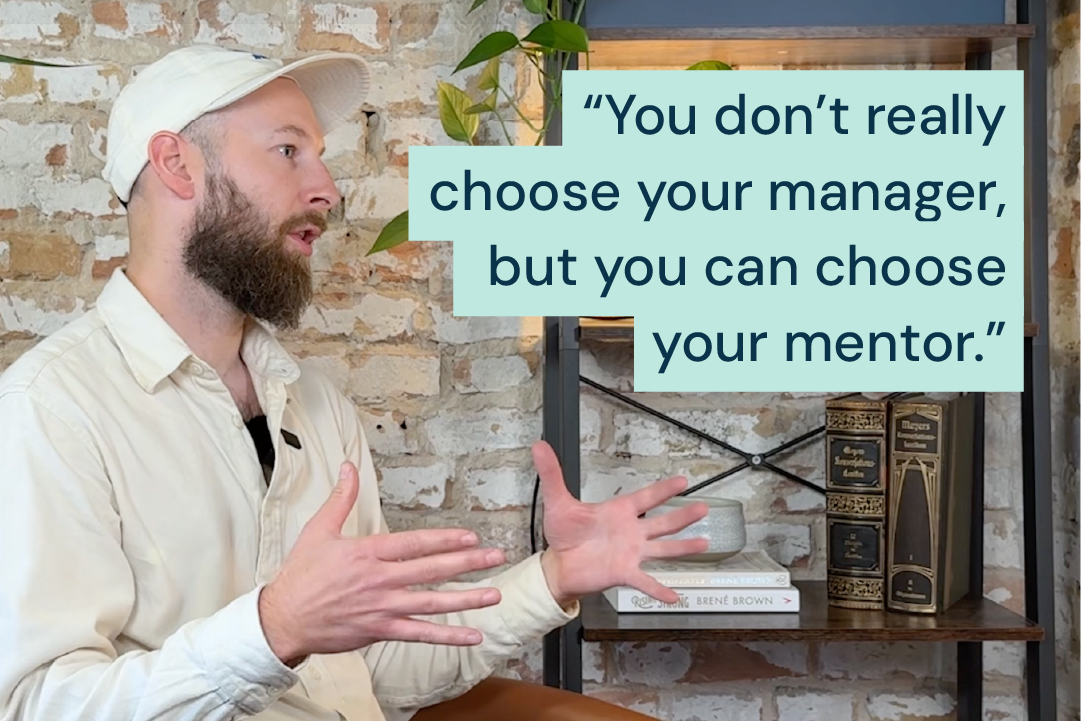
“You don't really choose your manager but you can choose your mentor. So that's why we prefer to use this term mentorship in the company and it goes along with the way you are ultimately responsible for your own career development. So pick a mentor in the company that will help you grow because you know what you need to achieve in order to reach the next step in your career. “
3. Modern engineers need product sense and an idea of the business, not just hard skills.
Technical skill is the baseline. What differentiates great engineering hires now, Vincent argues, is product thinking, empathy for the user, and a sense of purpose in the work – especially post-pandemic, as people move more and expect more from their jobs.
“Technical skills are super important, but we're also looking at product sense: how you understand, how you are able to empathize with the user, how you work within a team. Are you just purely someone who writes code or are you someone who also understands the business and why you write this piece of code? Who's the end user and who are you serving… A lot of companies are starting to shift their focus when it comes to recruitment from just purely technical to also having engineers that understand the business as well.”
_____
Check out the full conversation below
About The Techspace Pod
The Techspace Pod cuts through the noise to spotlight the European founders, operators, and investors building what’s next — from inside the change-making teams shaping tech in Berlin, London, and beyond.Each episode delivers sharp insight from Techspace member companies and the people redefining the ecosystem – from frontier tech and funding, to team culture and scaling strategies.
_____
Transcript:
Jane Wakefield: Hello, I'm Jane Wakefield, a former BBC technology journalist and your host for today's podcast. And I'm pleased to say I'm joined by Vincent Audoire, the co-founder and chief technology officer of Feather, a digital insurance platform. Welcome, Vincent.
Vincent Audoire: Thank you for having me.
Jane Wakefield: You're very, very welcome. Let's start by you telling me a little bit about Feather.
Vincent Audoire: Sure. So, Feather, we are a B2C, so direct to consumer insurance company. We're based in Berlin and we are targeting mostly expats, people who are moving from one country to another, and our core market is Germany right now. And we're helping people with everything insurance related — health insurance, home insurance, or anything around that. And we are giving a lot of advice to people about what insurance you need to get and just making insurance simple.
Jane Wakefield: What led you to first of all come on insurance as a company that you wanted to work in, and secondly this expat market specifically?
Vincent Audoire: Sure. So it's probably coming back from my previous work experience. Before founding Feather, I was one of the early employees at N26, which was a neo bank, which is still a neo bank actually. You probably haven't heard about it. But anyway, I joined banking and I saw a lot of parallel between banking and insurance, meaning that banking is frankly quite a boring industry in general and it was super outdated at this time. Right now we have all of those neo banks such as N26 or Revolut but back then when I joined them, which was more than 10 years ago, it was really nascent.
I saw the parallel with the banking industry 10 years ago and the insurance industry right now because the insurance industry is lagging behind the banking industry in this term. And I found it super interesting to work in those boring industries because there's just so much to do there. Insurance has such a bad reputation, such a bad name and the user experience around insurance is terrible. So there's a lot of room for improvement which I found really exciting. It's a bit of a boring industry in general.
Jane Wakefield: It's a really old industry as well, isn't it? I mean banking goes back many, many centuries.
Vincent Audoire: Yes.
Jane Wakefield: And a lot of people would say that it still does a lot of things in the way that were done many centuries ago.
Vincent Audoire: Yeah absolutely. We are painfully aware of it. Sometimes we are speaking with some potential partners and yes it is pretty set in the past.
Jane Wakefield: Another thing it shares with banking is it's heavily regulated.
Vincent Audoire: Yes.
Jane Wakefield: How has that been dealing with an industry that comes with so much regulation?
Vincent Audoire: So that's also an interesting parallel that we did with my experience at N26, that of course it's an industry which is heavily regulated but we are what we call an MGA. So we're not directly dealing with the insurance provider itself. Sorry, we're not really dealing with the insurance legal itself. We're regulated as a broker. So we're acting as a broker or surrogate, and we're dealing with everything customer related, which allows us to… the way you can see it — I'm explaining this one a bit poorly — but the way you can see it is that we are doing all of the heavy lifting customer-facing interaction because this is what we're good at. And all of the legalities we are leaving to our partner.
So this allows us to be able to iterate ultra fast and do the things that matter for our customers. We're leaving all of the complicated legal environment to our risk carrier pretty much.
Jane Wakefield: Another thing that you've brought from your previous role is an engineering background. Obviously we've seen lots of people that are engineers found companies. What is it that you bring specifically to a company when you're coming from that background? Is it that you understand the product and what you need to do or is there something else?
Vincent Audoire: For me, I think the engineering background really plays a lot in terms of how to solve problems. Seeing them, solving each and every problem with an engineering mindset: okay, we have this big problem in front of us, how do we split it into smaller individual chunks? And then, are these chunks small enough that they can be singularly addressed? Where are the hot points in those small problems and how do we sequentially go about solving them?
That's where I think engineering plays a key role in building businesses. It’s the approach to problem solving.
Jane Wakefield: Would you say that you have a fairly rebellious attitude to founding a company? Another thing that you did was bootstrap for an awful long time before you raised money. Is that something that you decided you needed to do or was it something that just happened because you just couldn't raise any money?
Vincent Audoire: Yeah. So the non-glorious answer is actually number two. We did try. The full story is that we went through this accelerator program which is named “Entrepreneur First”, which is based in the UK, and they were launching their Berlin batch. And the typical way companies go through EF is that they go through Entrepreneur First, they get validated and they're doing demo days, so they're going through the selection process, then they pitch their idea in front of a whole lot of investors, and then they get to raise their seed funding.
For us, we were not able to get traction from raising seed funding from this batch of investors. So it left us with only one choice: the company is going to die or we need to make money. And that's where we realized that we might be able to bootstrap it. But originally, when you see all of your friends raising a crazy amount of money or raising money and you are not at all, you're feeling frankly quite [unintelligible]. This was not something we wanted to do at the beginning and then we bootstrapped because the context made us have to bootstrap.
It's pretty fun to bootstrap in the end. It's funny because my friends who raised money were like “Oh, I wish we could have done a bootstrap” and when you're bootstrapping you're like “I wish I could have raised money”. So you're never really, you know…
Jane Wakefield: What was fun about it?
Vincent Audoire: What was fun about bootstrapping?
Jane Wakefield: Yeah.
Vincent Audoire: You really have a lot of freedom and you don't have the… when you're raising money from VCs, there is an expected return on the money that you're raising. So it's a lot of pressure. It's a lot of stress. When you're bootstrapping, you have a bit more freedom around that.
You need to be way more connected to your money as well. I mean, this is not the fun part of course, but it's a different mentality and I think for us it really worked well at the beginning. It's fun because you have a bit more control over your company.
Jane Wakefield: And I guess it instills a certain degree of discipline as well.
Vincent Audoire: Absolutely. Yes. Yes.
Jane Wakefield: Was the lack of funding down to the fact that people didn't believe in insurance and wanting to back insurance? What was it that was putting VCs off, do you think?
Vincent Audoire: I think it's a bit hard to answer on this one. I guess it's down to how convincing you are with your numbers and things like that. I think also there is a difference of mentality because we went through this batch of Entrepreneur First which is UK based and most of their portfolio was from the UK. So most of the VCs that they presented to us were UK-based VCs which didn't really understand the German markets when it came to insurance, which is fair. Also the German VCs have different mindsets than the UK VCs for instance.
The UK will be a bit more American style in some way, meaning that they will back you on the team, on your idea, on the vision, where the German VCs were a bit more “well, show me your numbers”. So at the beginning we had just frankly no numbers because we were just two guys with an idea but nothing more than that. So yeah, that's why it was difficult for us to raise funding.
Jane Wakefield: It begs the question then: You're French, why did you choose Berlin?
Vincent Audoire: I moved to Berlin a while ago, 10 years ago, and not to start this company. I just lived all my life in Paris and I wanted to see something different. And when I moved to Berlin, Berlin was really booming in terms of tech. There were a lot of companies popping here and there. That was the hot city after London in Europe when it came to startups. I really wanted to work for SoundCloud at this time. Then I happened to find some different jobs. I joined N26 when it was super early and just made my way in Berlin in this way.
Jane Wakefield: So you're headquartered in Berlin, but now thankfully you've moved on from the bootstrapping era into an era when you can actually expand. So tell me a little bit about that expansion and how you manage being headquartered in one particular city when you're also trying to expand to many other different countries.
Vincent Audoire: Sure. So yes, we are headquartered in Berlin, but we're a remote-first company. We have employees in a lot of different countries, Spain, Portugal, Cyprus, France, etc. So it felt quite natural for us to do the expansion. It's not like we need to open a branch in this country or something like that. We didn't really have to think in terms of administration cost behind it. There's not that much that we needed to do to go on this expansion.
Jane Wakefield: So you say that you're a remote-first company which begs the question what is the purpose of an office? What do you see as the role of the office in what you're doing?
Vincent Audoire: Sure. Actually, yes, we're a remote-first company with an office in Berlin, which sounds a bit, how to say, not very logical, but for the few people that actually do like to see a human face-to-face interaction. For me, I know that I like to go to the office because it gave me this… I go to the office and then when I'm done with my day, I travel back home. There is this…
Jane Wakefield: Demarcation.
Vincent Audoire: Yes. Thank you. Which I'm lacking at home. So that's why some people like to go to the office. And there was a demand for having an office. It happens to be in Berlin because that's where we have the most people. I think if, say for instance, we had 20-plus people in Madrid and they really wanted to have an office there to meet, we'd probably be opening an office there and I hope to have a space there. But that's why there is a need for having this office pretty much.
Jane Wakefield: And what's next? Are you eyeing up other countries? Are you looking to move out beyond Europe?
Vincent Audoire: Yeah. Absolutely. So right now we are in Germany. That's our stronghold I would say. Then we have France and Spain where we have actual presence with country managers. We also technically live EU-wide with some policies and we're actively looking at countries outside of Europe as well. We are currently thinking about Mexico, Latin America in general and UAE as well. So we have some ideas around expansion. Hopefully it's going to materialize this year but let's see. We're looking at the market in different places.
Jane Wakefield: How do you navigate that in terms of different cultures and different regulatory environments because every country does things in a different way, I should imagine. There's no set pattern to it. Is that a tricky thing to navigate?
Vincent Audoire: Yeah, we're always very optimistic and we just go to countries and then we see what works. That's how we like to do things. We're looking around the legal implications and then we're: "All right, let's just try it. Let's just try it out." And then we just go, we try and if it doesn't work we try something else. We have this very iterative approach of doing things, which is really important — trying things and failing as early as we can to test.
There's so much you can test beforehand. The best test you can do is just actually try to go there and do something.
Jane Wakefield: It's interesting you say about failure because I speak to a lot of founders and failure is an important thing to learn, isn't it? To learn how to cope with failures and what you then do differently. So has that been a very important part of your journey that you test things out and if they fail, you do them in a different way?
Vincent Audoire: Yeah, absolutely. And it is also okay to move on from failure as well, not being stuck in something. The worst, which is often the case, is when something kind of works but not really and then you're like “Should I double down or not?” Sometimes that's the hardest thing because when it's a clear failure, it didn't work at all, then it's easy, right. But when it's kind of working and then you're not really sure, it's really hard to say “All right I'm just going to drop it and move on to something else”.
Jane Wakefield: That's the engineer in you, isn't it?
Vincent Audoire: I think, yeah, exactly. That's where we have some good arguments with my co-founder I would say.
Jane Wakefield: So let's talk a little bit more about your company. Tell me first of all how big it is, how many people you have, what's your breakdown in terms of the engineering team versus other bits of the business now.
Vincent Audoire: Sure. So we're about 60 people now. Engineering team, I think we have around 15 engineers. And then the product team in general — engineers plus designers plus PM and stuff like that — should be around 25 people in the company. So a bit less than half and then the rest is business development and operation pretty much.
Jane Wakefield: And how is managing quite a large team, having gone from just two of you to this big team made up of lots of different people and lots of different personalities? What sort of tips have you picked up along the way about how you cope with managing a team of that size?
Vincent Audoire: I think we really recruited well in a sense that people are self-managing themselves. People are responsible. Ultimately you're responsible for your career and we are making sure that we're recruiting people that are taking care of themselves. We really value autonomy, being proactive. I'm trying to find a good way to articulate this one. What we really want is the people we recruit… we usually try to get people who are… we…
Jane Wakefield: Self-motivated…
Vincent Audoire: Yeah. Self-motivated, have a high level of autonomy.
Jane Wakefield: Yeah.
Vincent Audoire: That's what we're trying to recruit. Then that goes along with the fact that if you recruit those people really well, they don't really need to be actively managed because they take care of themselves.
Jane Wakefield: It's interesting you mentioned management because you also favor mentorship. So is that something that you see as coming from on high or is that something that you want to see throughout the team? So everybody mentors somebody else and what does mentorship mean to you?
Vincent Audoire: The idea behind that is more that I don't really like the term ‘management’ because it always feels that there is a hierarchy, which I mean, yes of course there is hierarchy, but mentorship is more… as a manager you don't choose to be managed by someone, but mentorship is something where you actually choose to be mentored by someone. I think this resonates a bit more. A manager gets pushed to you. You don't really choose your manager but you can choose your mentor.
So that's why we prefer to use this term mentorship in the company and it goes along with the way you are ultimately responsible for your own career development. So pick a mentor in the company that will help you grow because you know what you need to achieve in order to reach the next step in your career. So pick a mentor that will help you get there.
If you get assigned a manager that doesn't click with you, you're kind of stuck sometimes. So that's why we prefer to go with the idea of having a mentor instead.
Jane Wakefield: And is that something that you kind of mandate, the mentorship, or is it something that you allow to just happen more organically? I mean does everybody have to have a mentor and does everyone have to be a mentor?
Vincent Audoire: No, it happens a bit more organically and also depending on which function of the company you are in. The higher you are usually, the more… let's say the more guidance… I don't know if I can say this one, but the people who are reporting to me directly, I'm not necessarily giving them career advice because they're probably more advanced in their career than I am sometimes frankly. So who am I to… I'm not going to manage them or anything like that. So at this level it's: you're on your own, we help each other, but there is no real mentory or management scheme.
When it’s someone who's way more junior in the company these things are a bit different I would say. The mentorship is mostly tailored for the engineering team first of all and it's really… you can see on our company blog we put all of what we expect engineers to be performing at different levels. We put the competence grid, and then you see you're responsible for your own career and maybe you realize that you're lacking experience in this point or this other point. Then you will ask someone in the company “Hey who's the best at these things?” Then they will be: you should probably pair yourself with this person. They're really strong on this. You should try to get better at this. So that's how it works.
We're really again trying to say to people, “Hey, you're ultimately responsible for your career. Choose a mentor. Try to level yourself up.” We also have an education budget as well. Maybe you can use it to attend a conference or buy a book around X or Y topic that you want to improve yourself on. So that's how we are doing it. We give guidelines and we say, “It works best if you do this.”
Then it's up to you to decide if you want to meet weekly or every second week. I think those things I don't like to be super rigid and from my own experience, sometimes it's super useful especially at the beginning to meet on a weekly basis. And then eventually as time goes, sometimes the frequency can be reduced and then things feel a little… and then you're like “Maybe we don't even need it anymore” and then you move on.
I don't like to have this “you need to meet every week” because sometimes it feels super counterproductive, and then you're stuck and you're meeting for the sake of meeting but it's not really doing anything anymore. That's also okay. When the meeting is not being productive anymore, it means that maybe the person stepped up enough that this meeting serves no purpose anymore. So yeah, we're giving guidelines, but then it's up to the person to decide what's best for them.
Jane Wakefield: So do you really believe in transparency? Because another thing that you've done is publish salary bands and seniority. What was the thinking behind that? Is that just so that everybody knows what's going on and has a sort of input into it or was it a different philosophy behind guiding that?
Vincent Audoire: Actually the idea behind the salary band is that we just wanted to avoid those awkward conversations about salary every time we hired a software engineer. It's just super useful where you say this is the salary, this is what you're going to… this is the company that you're applying for, this is the salary band, take it or leave it. And also it makes everybody in the company, when we're doing this yearly salary calibration, people understand where they are. It's very clear. It makes things less emotional about salary compensation because it can be quite an emotional topic.
So it was really: if we put all of these things public, it's generally beneficial for everybody in the company. It also is great PR for the company outside. But outside of the salary topic, which we publish on our blog, we have a lot of things that we're doing internally that we want to make public. For instance, the quarterly update that we send to our investors we also send to the rest of the company so that everybody understands what's going on.
For instance, little things such as most of our Slack channels are public. They're public by default unless you really specifically need something to be private, meaning if you need to discuss something about customer data or something that cannot be publicly shared. Most of our meetings are also transcribed and everybody can check what the meeting was about. So if you want to check the latest meeting about SEO in the company, you can, even if that's not something that you're necessarily dealing with every day. But if you have the curiosity, you can check all of these things. And that's the philosophy that we have in the company.
Jane Wakefield: Do you think the reason that it's happened is a bit of a backlash against big tech companies who are quite proprietary? What's the background to this?
Vincent Audoire: I think the background to why we decide to build in public is just trying to be humble about what you're doing and really just showing: this is who we are, there are humans trying to do these things. It really came from nothing more than that. I had a few companies that are building in public that I respect and I was like “That's cool, I would like to do the same thing.” There was no real calculation more than that. We were just: "Oh, I like what they're doing. I want to do the same thing."
Jane Wakefield: I wonder what investors make of it. Are they happy about that?
Vincent Audoire: They don't have too much… again because we're not… maybe if we were fully open source — our codebase and stuff like that — maybe they would be a bit more worried but with what we're doing, yeah. And I think it's good PR as well. So I guess they're happy about it.
Jane Wakefield: There's been a lot of talk around talent, especially in the engineering world, not enough engineers and then even retaining that talent if you get them. How have you found that both in terms of recruiting and retaining?
Vincent Audoire: Yes, definitely challenging. The recruiting on the engineering front, I think the criteria has changed a little bit. When I started my career it felt like you really needed to be super fit technically all the time. We didn't care so much about… I don't want to say the human aspect, but the outside of the engineering — your social skill, how you manage yourself within your project and stuff like that.
Whereas right now for us technical skills are super important, but we're also looking at product sense: how you understand, how you are able to empathize with the user, how you work within a team. Are you just purely someone who writes code or are you someone who also understands the business and why you write this piece of code? Who's the end user and who are you serving?
So this has changed quite a lot in the engineering industry and I feel a lot of companies are starting to shift their focus when it comes to recruitment from just purely technical to also having engineers that understand the business as well.
Jane Wakefield: Is Berlin a “hot bed” of tech talent, would you say? We were talking to a guest previously who was saying that the city seems to attract people that are risk-takers and people that want to be involved in things that perhaps are more of a startup culture than getting into the corporate world. Is that a trope that you would recognize about Berlin?
Vincent Audoire: I'm not sure. I guess so. I would say it's the same as every big major startup city. You will find the same thing. I'm sure you'll find the same thing in London which is the ultimate capital of startup in Europe. If you look at the numbers they speak for themselves. It's kind of the same in Paris as well. Berlin as well. Those cities that attract… that have a network of investors, infrastructures around startups and stuff like that, they attract people who are risk-takers and who want to build things for sure. I would not say Berlin is unique compared to its European counterpart on this front though.
Jane Wakefield: What about work culture? I mean how have you found that — is it a really important part of what you do, making sure that everybody is happy in their roles and that there's general contentment in the company? That seems to have become a big focus for people especially since the pandemic. Would you agree that that's come into closer focus in the last few years?
Vincent Audoire: I would say that after the pandemic people are really realizing that there's more to work as well. This is something that you need to take into account. Your job has to have a purpose now, and it needs to be intellectually rewarding for people to stick around. So I think people are less attached to their job than before. People move a bit more these days, and real purpose and having something which is intellectually challenging for people seems to be really important these days for sure.
Jane Wakefield: So every company is now thinking about AI, starting to implement AI. What does that mean to Feather?
Vincent Audoire: That means that we're trying to actively release some proof of concept within the company which are delivering actual value. As you say, a lot of companies are doing a lot of things. There is a lot of non-thinking stuff around what they're doing with AI, and we're really taking a step-by-step approach of trying to understand little by little what those LLMs, Large Language Models, can do and trying to find first of all one niche little problem which we can solve with those things and then expanding it and going from there.
So we have some teams responsible for experimenting with that, mostly around things like automating operation and it's super useful. It's really interesting to do because we have a super short feedback loop. We're doing it with people within the company and it's not customer facing yet. And we're just building more and more knowledge around how to build using this super cool new technology.
Jane Wakefield: Vincent, I have thrown a lot of questions at you and I'm going to end by asking you to think of a question that's been on your mind, a burning question whether it be about your industry, startup culture, or Berlin.
Vincent Audoire: Okay.
Jane Wakefield: What's the question that keeps you awake at night?
Vincent Audoire: So lately with all of the development, with all of AI and stuff like that, I'm really wondering how the future is going to look when it comes to our human–machine interface. So essentially around the way right now we're using phones with apps and everything seems to be moving text based right now because those applications are really getting more and more clever around reading your intent and understanding what you want to do eventually.
Maybe for instance for our industry, instead of having… right now we have a mobile app like every good insurance company has where you can manage your policy, and maybe this will just go through GPT or Claude AI or something like that, especially with the new upcoming of those frameworks like MCP from Anthropic. Maybe that will mean that it will be the end of the graphical interface as we know them. So I'm kind of wondering if that could be something. So yeah, that's one of the questions that gets me a lot.
Jane Wakefield: That's a good question and actually this is a theme that's coming up a lot: this human–digital interface and how we're going to bring the two together in coming years. Vincent, it's been an absolute pleasure talking to you. Thank you so much for joining us.
Vincent Audoire: Thank you very much. Thank you for having me.


.avif)
%20(6).avif)